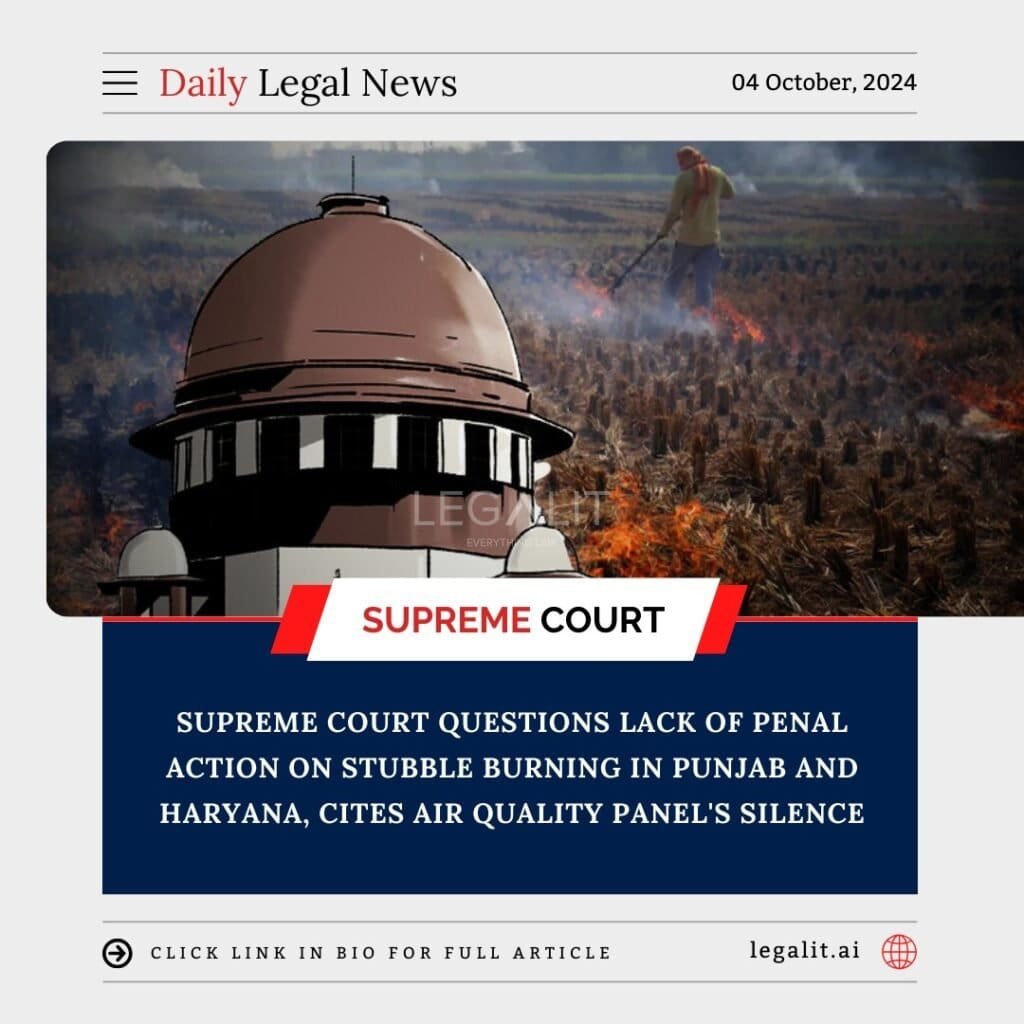
A recent statement by the Supreme Court of India has brought attention to the critical issue of air pollution in the northern regions of the country, especially during winter months. The Supreme Court expressed its frustration with the inaction of the states of Punjab and Haryana, highlighting their failure to take appropriate penal action against stubble burning. Moreover, the Court also pointed out the inactivity of the Commission for Air Quality Management in addressing the persistent issue effectively.
Background of the Case
Stubble burning in Punjab and Haryana is a well-known problem that contributes significantly to air pollution, particularly in the National Capital Region (NCR). Every year, during the paddy harvesting season, farmers set fire to the leftover stubble in their fields to prepare for the next crop cycle. The smoke produced during this practice leads to severe smog, exacerbating air quality in nearby regions, including Delhi, which already struggles with pollution levels. Despite multiple efforts to address this issue, the practice persists, mainly due to a lack of viable alternatives and government support for farmers.
In 2021, the Commission for Air Quality Management (CAQM) was established to ensure the coordination and implementation of measures aimed at reducing pollution in the NCR and surrounding areas. The Commission has been responsible for monitoring the situation and taking appropriate action against non-compliance, including penalizing states for failing to curb stubble burning.
Supreme Court’s Observations and Ruling
In a recent hearing, the Supreme Court highlighted its “exhaustion” with the ongoing stubble burning issue and the government’s slow response in dealing with it. The Court pointed out that, despite the severe impact of pollution on public health, both Punjab and Haryana were not taking the necessary penal actions against the practice. Moreover, the Court criticized the Commission for Air Quality Management for its apparent silence and inaction on the matter.
The Court emphasized the need for accountability, expressing concern that despite numerous directives and the establishment of the CAQM, the ground situation remained unchanged. It directed both state governments and the CAQM to present detailed reports on the actions taken so far and their future strategies for effectively curbing stubble burning.
Implications of the Judgment
The Supreme Court’s directive has several implications for stakeholders involved in tackling air pollution:
State Accountability: The ruling emphasizes the accountability of Punjab and Haryana in addressing stubble burning, placing greater pressure on them to penalize violators. This could lead to a more proactive approach by state governments to prevent the practice, including increased monitoring and stricter penalties.
Role of the CAQM: The Supreme Court’s criticism of the CAQM’s inaction serves as a wake-up call for the commission. It underscores the importance of the commission’s role in ensuring compliance and taking stringent actions against violators. The CAQM may be prompted to enhance its enforcement measures and increase transparency in its efforts.
Public Health Impact: By highlighting the importance of curbing stubble burning, the Court is addressing the serious health risks associated with air pollution. The implications of this judgment could lead to long-term improvements in air quality, particularly during the winter months when pollution levels spike.
Focus on Alternative Solutions: The directive may also prompt greater focus on developing and implementing sustainable alternatives to stubble burning, such as subsidizing agricultural machinery that can help manage crop residue without the need for burning.
Need for Reforms in Agricultural Practices and Environmental Governance
To address the root causes of stubble burning and its impact on air quality, several reforms are needed:
Support for Farmers: Farmers resort to stubble burning primarily due to economic constraints and a lack of affordable alternatives. Providing subsidies or incentives for agricultural machinery like the Happy Seeder, which can help manage crop residue without burning, would be a significant step in reducing the practice. Additionally, encouraging crop diversification could reduce the dependency on paddy cultivation, which is a major contributor to stubble burning.
Strengthening CAQM’s Powers: The Commission for Air Quality Management needs to be empowered with greater authority and resources to enforce regulations. The commission should have the power to take strict action against states that fail to comply with directives, ensuring that the measures taken are effective.
Public Awareness Campaigns: Raising awareness among farmers about the adverse effects of stubble burning on public health and the environment can also play a crucial role. By educating farmers and the general public, the government can foster a sense of responsibility and encourage community participation in finding a solution to the problem.
Improving Coordination: There is a need for better coordination between the central government, state governments, and local authorities to ensure that anti-pollution measures are effectively implemented. A collaborative approach is essential to tackle the cross-border nature of air pollution.
Conclusion
The Supreme Court’s remarks regarding the failure of Punjab and Haryana to take penal action against stubble burning, along with the CAQM’s silence, underscore the urgent need for a more effective approach to addressing air pollution. The ruling highlights the need for greater accountability and action from both state authorities and regulatory bodies to protect public health and ensure a cleaner environment.
To tackle the issue of stubble burning comprehensively, it is imperative to focus on reforms that provide viable alternatives for farmers, strengthen environmental governance, and foster public awareness. Only through a combination of strict enforcement, economic incentives, and collaboration can India hope to reduce the severe impact of stubble burning on air quality and public health. The Court’s intervention serves as a reminder of the importance of swift and decisive action in addressing this critical issue.
[ajax_load_more]