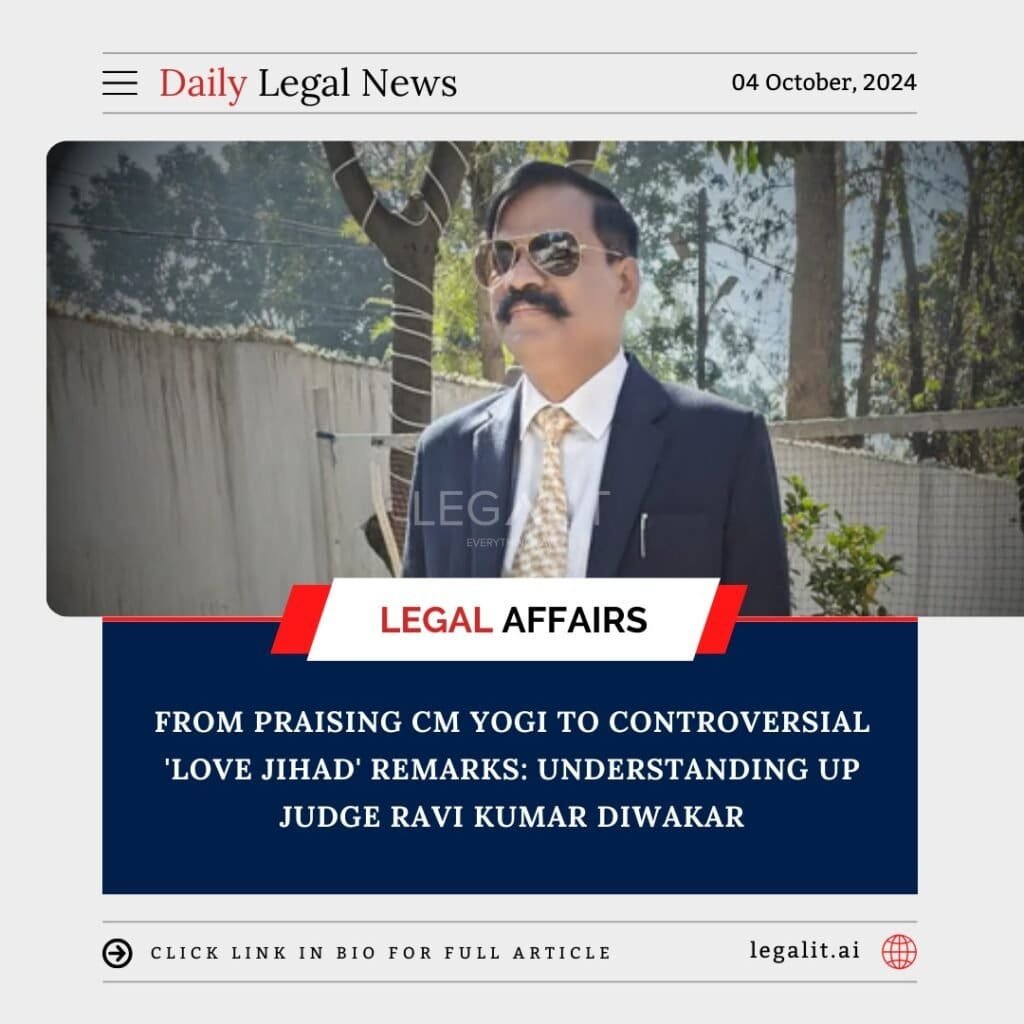
The name Ravi Kumar Diwakar has been in the spotlight in recent months, largely due to his outspoken comments and judicial decisions. As a judge serving in Uttar Pradesh, Diwakar has not shied away from public praise of political leaders or taking a strong stance on sensitive issues like “love jihad.” This article provides a closer look at Judge Ravi Kumar Diwakar, delving into the background of his controversial comments, the judicial decisions he’s made, and their broader implications for the judiciary in India.
- Background of the Case
Judge Ravi Kumar Diwakar became known nationwide after his handling of high-profile cases in Uttar Pradesh and his public remarks that have stirred political and social discussions. He notably praised Uttar Pradesh Chief Minister Yogi Adityanath’s policies on law and order, which garnered both support and criticism. Additionally, his comments on “love jihad” – a term used to describe alleged conspiracies by Muslim men to marry Hindu women with the intent to convert them to Islam – have brought significant attention to his judgments.
Diwakar’s judicial role intersects with the charged political atmosphere in Uttar Pradesh, where topics like religious conversions and interfaith marriages are already sensitive. His comments have amplified debates on these issues and have been scrutinized by both political observers and legal experts.
- Court’s Ruling and Reasoning
In several cases related to “love jihad,” Judge Ravi Kumar Diwakar has emphasized the need for vigilance regarding interfaith marriages involving alleged coercion or deceit. These rulings align with the political narrative promoted by the state government, which has been vocal about countering “love jihad.”
Judge Diwakar has argued that such practices threaten the social fabric and stability of the state. His reasoning centers on the protection of individuals from being forced or manipulated into religious conversions. Moreover, he has cited concerns about maintaining public order and safeguarding the rights of women.
In praising Chief Minister Yogi Adityanath, Diwakar acknowledged what he viewed as improvements in law and order in the state. He lauded the administration’s crackdown on criminal activities and credited it with creating a safer environment for citizens. However, these statements have drawn criticism from those who believe that judicial officers should maintain a clear separation from political influences.
- Implications of the Statements and Rulings
Judge Ravi Kumar Diwakar’s remarks and rulings have several implications:
Impact on Judicial Neutrality: The judiciary is expected to remain independent and impartial. When a judge publicly praises a political leader, it raises concerns about the perceived neutrality of judicial decisions. Critics argue that such statements might undermine the public’s confidence in the judiciary’s ability to deliver unbiased judgments.
Societal Polarization: The judge’s strong stance on “love jihad” has the potential to deepen societal divisions, particularly along religious lines. It reinforces narratives that may further alienate communities from each other and foster mistrust.
Legal Precedents: Rulings on interfaith marriages and religious conversions can set important legal precedents. Judge Diwakar’s judgments may influence how similar cases are approached in the future, especially in terms of the evidentiary standards required to prove coercion or deceit in interfaith relationships.
- Need for Reforms in Judicial Conduct and Independence
The controversy surrounding Judge Diwakar’s statements and rulings highlights the need for reforms in judicial conduct and independence:
Clear Guidelines on Public Statements: There is a need for clear guidelines regarding the kind of public statements judges can make. To protect the integrity of the judiciary, it is crucial to ensure that judges refrain from expressing opinions that might be construed as politically biased.
Training on Sensitivity and Neutrality: Training programs emphasizing the importance of impartiality and sensitivity in judicial conduct could help prevent the judiciary from getting embroiled in political controversies.
Strengthening Accountability Mechanisms: The judiciary should have mechanisms in place to address any perceived bias or misconduct. This ensures that judges remain accountable to their role as upholders of the law without any external influence.
- Conclusion
Judge Ravi Kumar Diwakar has become a polarizing figure in the judicial landscape of Uttar Pradesh, with his rulings and public remarks sparking debates on judicial impartiality and religious freedom. His praise of political leaders and comments on contentious issues like “love jihad” reflect a broader challenge facing the judiciary: balancing personal opinions with the requirement to remain neutral and uphold constitutional values.
As India navigates its diverse and often divided society, the judiciary’s role in maintaining fairness and justice becomes all the more critical. Ensuring that judges like Ravi Kumar Diwakar adhere strictly to principles of judicial independence is vital for upholding the public’s trust in the legal system.
[ajax_load_more]