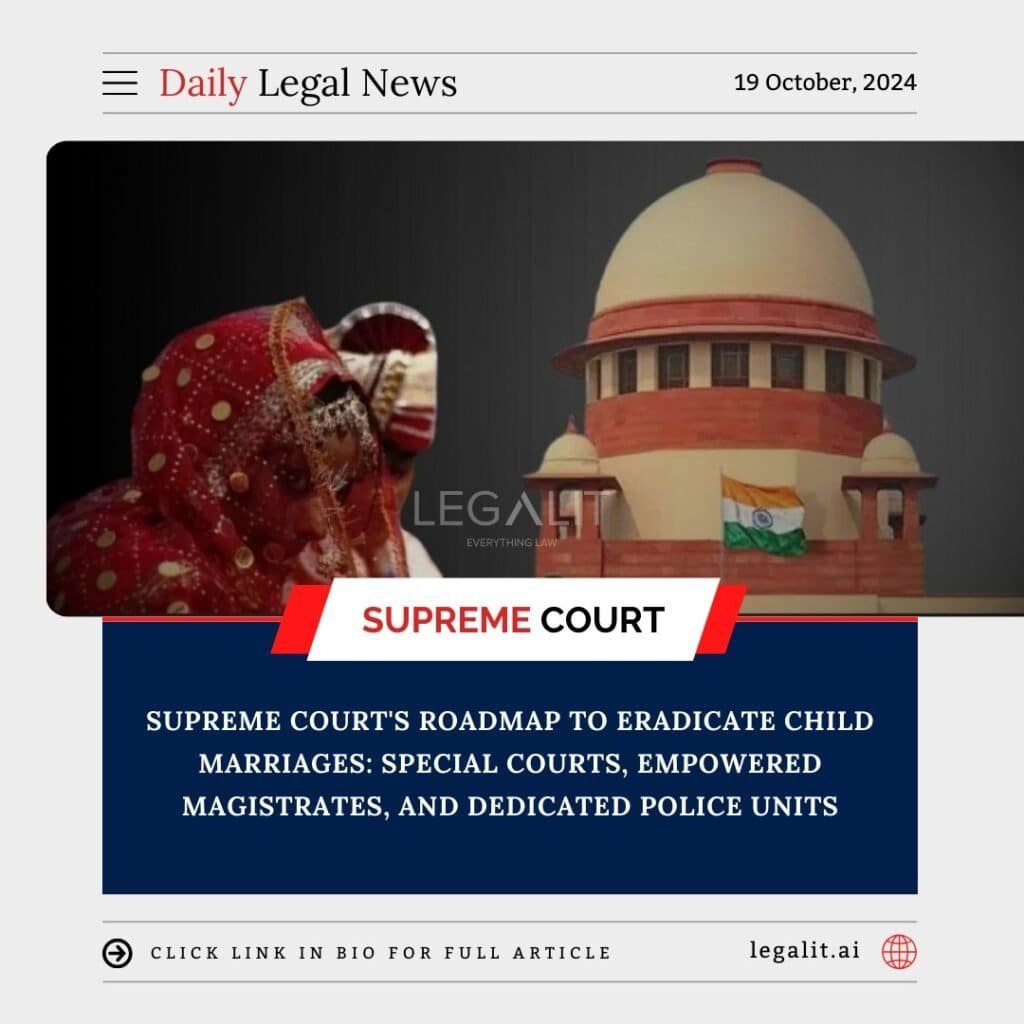
In a significant step towards eliminating child marriages in India, the Supreme Court has outlined a comprehensive strategy aimed at strengthening legal and institutional frameworks. This roadmap involves the establishment of special courts, empowering magistrates with additional powers, and forming dedicated police units, all designed to curb this illegal and harmful practice.
The Current State of Child Marriages:
Despite being outlawed under the Prohibition of Child Marriage Act (PCMA), child marriages continue to persist in various parts of India, particularly in rural areas. According to recent reports, early marriages often lead to long-term detrimental effects on the physical and mental well-being of children, particularly girls, and contribute to issues such as child pregnancies, gender inequality, and school dropouts.
Key Elements of the Supreme Court’s Roadmap:
- Special Courts:
The Supreme Court has proposed the creation of special courts specifically dedicated to addressing cases of child marriages. These courts would expedite trials, ensuring quicker justice and preventing delays that often result in prolonged suffering for the victims. - Empowering Magistrates:
In a significant move, magistrates across the country are to be granted more authority to intervene in child marriage cases. This would allow them to not only nullify illegal marriages but also take necessary steps to protect the victims and impose legal consequences on the offenders. - Dedicated Police Units:
The Court also suggested the formation of police units focused on preventing child marriages. These units would work in collaboration with local administrations to identify and intervene in cases before they occur, offering a proactive approach to tackling the issue.
Why This is Crucial:
The eradication of child marriages is vital for promoting gender equality and protecting children’s rights in India. With this structured roadmap, the Supreme Court aims to ensure that the enforcement of laws against child marriage becomes more robust, effective, and accessible. By combining judicial, executive, and police forces, the country stands a better chance of addressing this long-standing social issue.
Conclusion:
The Supreme Court’s roadmap to tackle child marriages marks a progressive step in the fight for children’s rights and gender equality. Through the introduction of special courts, empowering magistrates, and dedicated police units, the Court seeks to create a more responsive legal system that can not only punish offenders but also prevent child marriages from taking place in the first place.
[ajax_load_more]