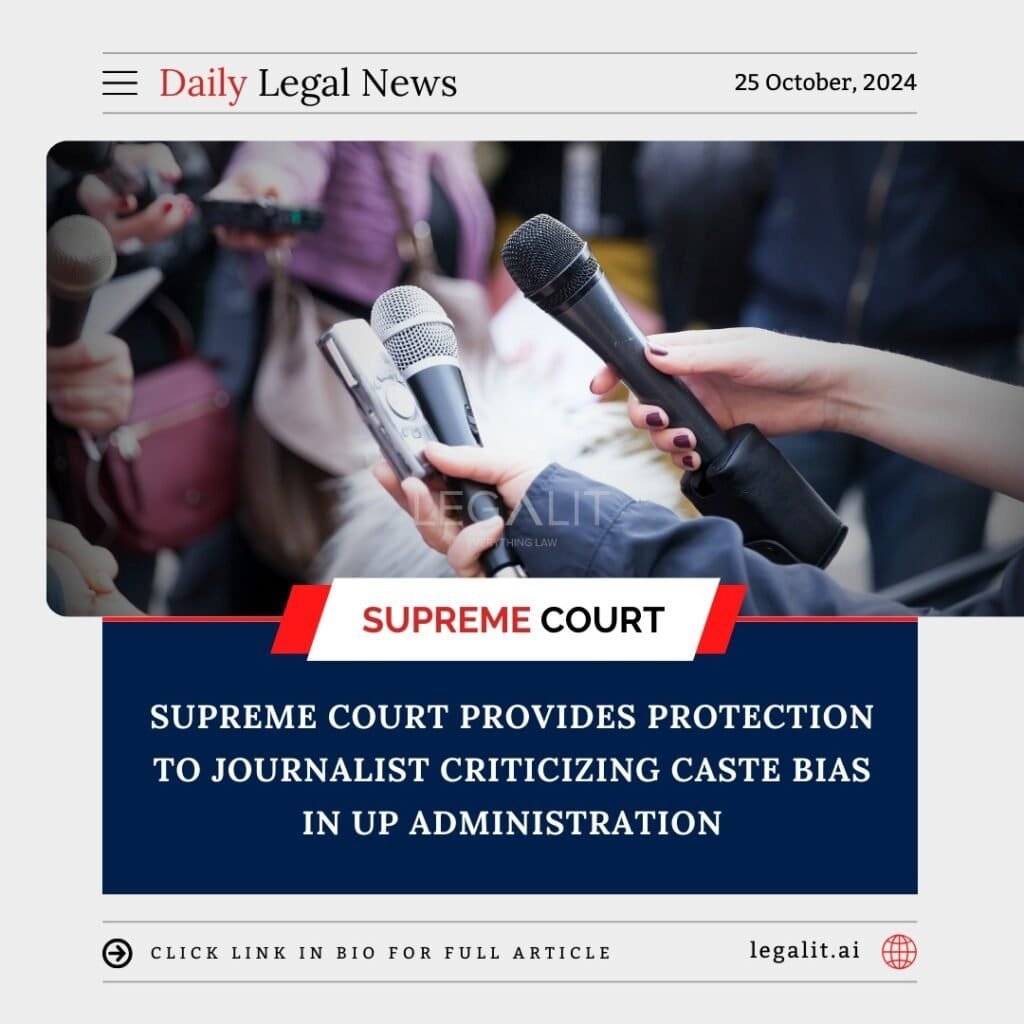
The Supreme Court of India has extended legal protection to a journalist who was booked for a tweet criticizing caste discrimination within the Uttar Pradesh administration. This decision underscores the court’s commitment to safeguarding freedom of expression, particularly in the context of media reporting on sensitive social issues.
Background:
The journalist faced charges after tweeting about alleged caste biases in administrative actions, which sparked controversy and led to legal repercussions. The arrest was viewed by many as an attempt to suppress dissent and criticism of government policies, raising concerns about media freedom and the treatment of journalists in the country.
Court’s Decision:
In granting protection, the Supreme Court emphasized the importance of free speech and the role of journalists in holding authorities accountable. The court stated that expressions concerning public interest and governance should not be stifled, especially when they aim to highlight systemic issues like caste discrimination.
Implications:
This ruling may encourage other journalists and citizens to voice concerns about governance without fear of legal repercussions. It sets a precedent for protecting freedom of speech against potential abuses of power by the state.
Conclusion:
The Supreme Court’s decision to protect the journalist reflects a growing recognition of the need to uphold democratic values and support those who challenge systemic injustices. As discussions around caste and governance continue, this ruling may serve as a critical reminder of the importance of media freedom in a democratic society.
[ajax_load_more]