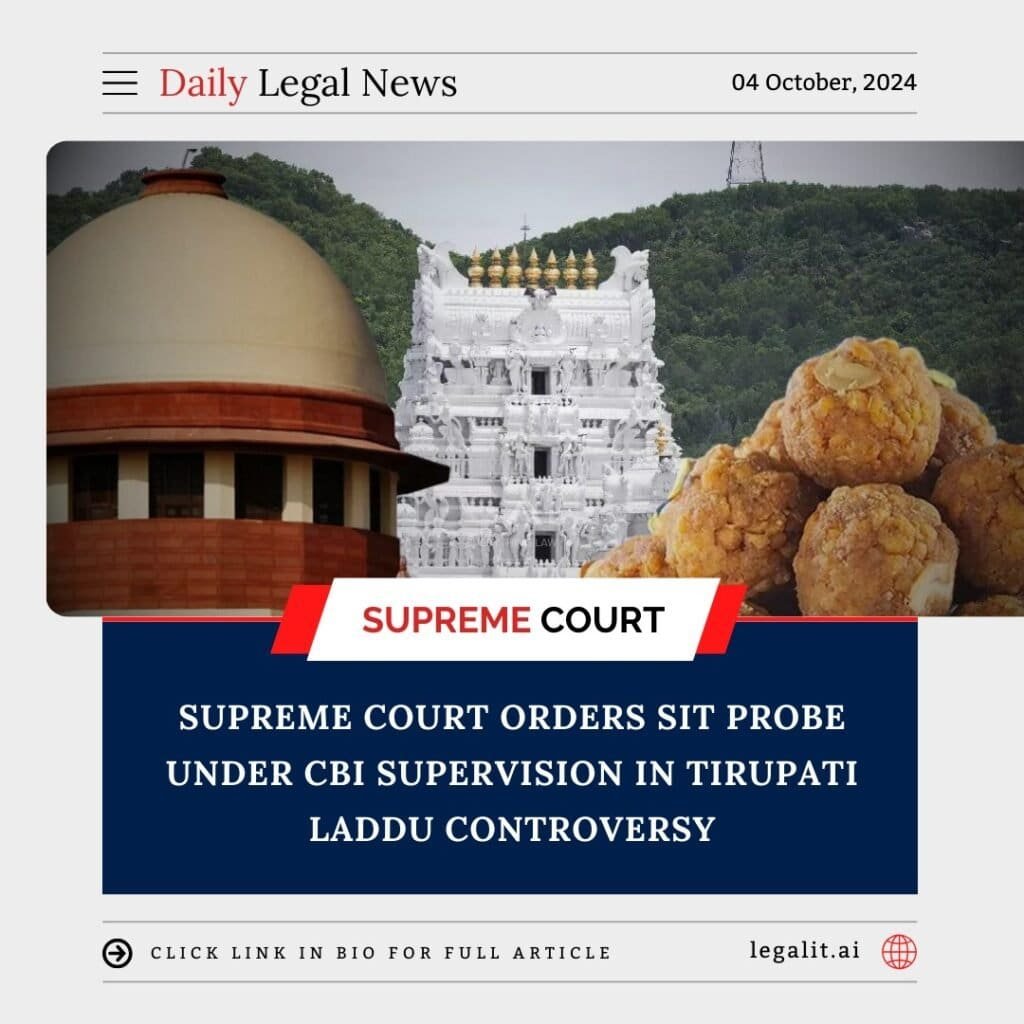
In a significant development, the Supreme Court of India has mandated a Special Investigation Team (SIT) probe under the supervision of the Central Bureau of Investigation (CBI) regarding the ongoing controversy surrounding the famous Tirupati Laddu. This decision comes amidst allegations of malpractices and irregularities concerning the distribution and sale of the sacred offerings at the Tirumala Tirupati Devasthanams (TTD), which manages the renowned Tirupati temple.
Background of the Controversy
The Tirupati Laddu is a renowned prasadam offered to devotees at the Tirumala temple, attracting millions of pilgrims each year. However, concerns have emerged regarding the alleged commercialization and mismanagement of the laddu distribution process. Reports indicated instances of overpricing, black market sales, and unauthorized transactions, which raised questions about the transparency and integrity of the TTD’s operations.
The controversy gained momentum when complaints from devotees and activists prompted scrutiny into the management practices of the TTD. Allegations included that certain individuals were exploiting the religious significance of the laddu for financial gain, leading to a public outcry for accountability and reform.
Court’s Ruling and Reasoning
The Supreme Court’s order for an SIT investigation reflects its commitment to ensuring transparency and integrity in religious institutions. The court expressed concern over the allegations and emphasized the need for a thorough and impartial inquiry into the management of the laddu distribution system. By placing the investigation under CBI supervision, the court aims to enhance the credibility and rigor of the inquiry, ensuring that all aspects of the allegations are comprehensively examined.
Implications of the Judgment
The ruling carries several implications:
Restoration of Trust: The investigation seeks to restore faith among devotees in the management of the sacred offerings, addressing concerns about exploitation and mismanagement.
Accountability in Religious Institutions: This decision sets a precedent for accountability in religious organizations, underscoring the importance of transparency in managing public trust and faith.
Legal Precedent for Future Cases: The case may pave the way for similar investigations in other religious institutions facing allegations of mismanagement or corruption.
Need for Reforms in Religious Administration
The ongoing controversy highlights the need for reforms in the administration of religious institutions, including:
Transparency Measures: Implementing robust transparency measures in the management of donations and offerings can help prevent corruption and mismanagement.
Regulatory Oversight: Establishing regulatory bodies to oversee the operations of religious organizations may enhance accountability and ensure adherence to ethical standards.
Public Involvement: Encouraging public participation in the governance of religious institutions can help address grievances and build trust between devotees and management.
Conclusion
The Supreme Court’s directive for an SIT probe under CBI supervision into the Tirupati Laddu controversy is a crucial step towards ensuring accountability and transparency in the management of religious offerings. As the investigation unfolds, it will be essential to monitor the outcomes and reforms that may emerge from this inquiry, ultimately aiming to restore public trust in one of India’s most revered religious institutions.
[ajax_load_more]