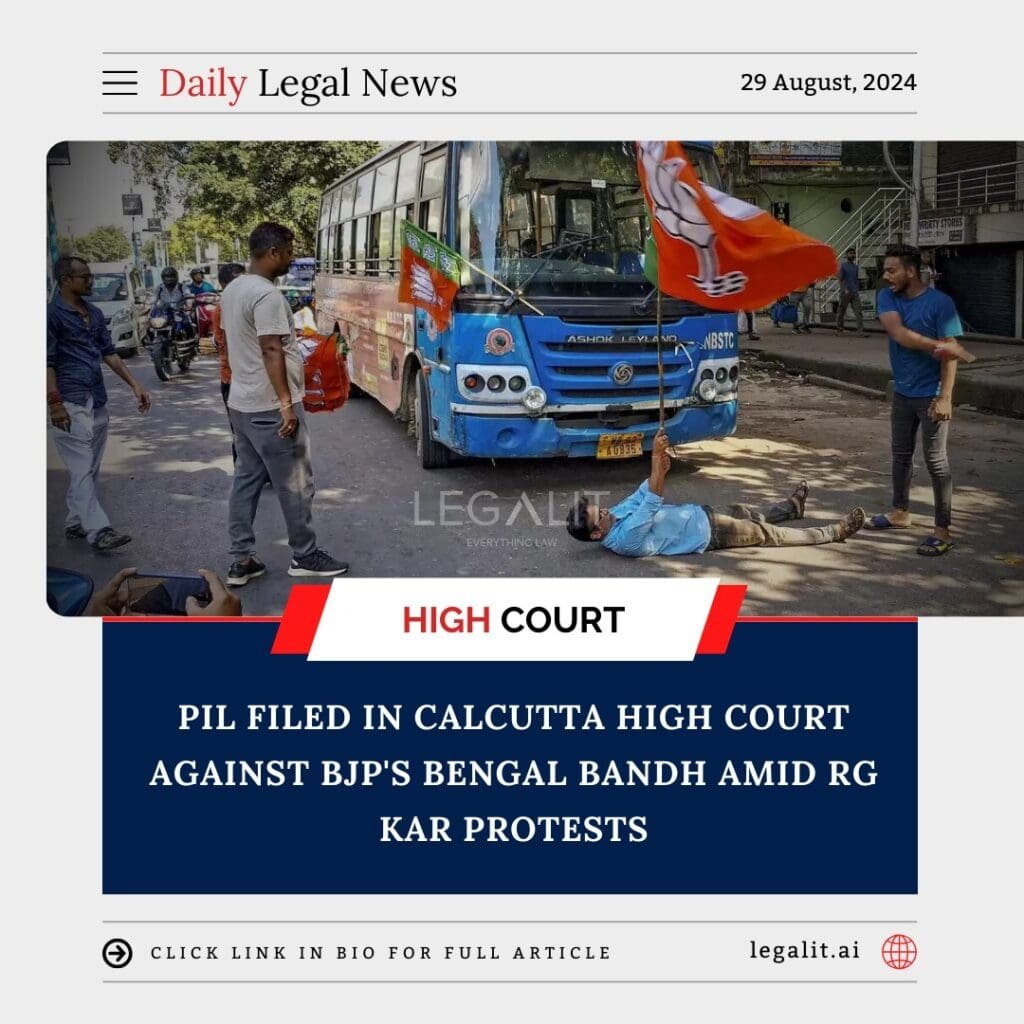
In response to the ongoing protests related to the RG Kar Hospital case, a Public Interest Litigation (PIL) has been filed before the Calcutta High Court challenging the Bharatiya Janata Party’s (BJP) call for a bandh in West Bengal. The bandh, which was organized in protest of the alleged mishandling of the RG Kar Hospital case, has sparked significant debate and legal scrutiny. The PIL seeks to address the implications of the bandh on public life and legal proceedings.
Background of the Protests:
- RG Kar Hospital Case:
The RG Kar Hospital case has been at the center of controversy, involving serious allegations of misconduct and legal issues. The case has drawn widespread attention and led to protests demanding justice and accountability. The public outcry has been amplified by political parties, leading to various forms of demonstration, including the BJP’s call for a statewide bandh. - BJP’s Bengal Bandh:
The BJP’s decision to call a bandh was intended to draw attention to the alleged inadequacies in handling the RG Kar case. The bandh was meant to serve as a political statement and to mobilize public support for the cause. However, it has led to significant disruptions in normal life and has been criticized for its potential impact on public order and daily activities.
Details of the PIL:
- Challenge to the Bandh:
The PIL filed in the Calcutta High Court challenges the legality and appropriateness of the BJP’s bandh. It argues that such disruptions not only impact public convenience but also interfere with legal and administrative processes related to the RG Kar case. The petitioners contend that the bandh undermines the judicial process and may exacerbate existing tensions. - Legal and Social Implications:
The PIL raises concerns about the impact of political protests on public life and legal proceedings. It questions the legality of organizing a bandh and its alignment with democratic norms and legal standards. The petitioners seek the Court’s intervention to address the potential consequences of the bandh on public order and judicial integrity.
Key Issues in the PIL:
- Public Disruption:
The PIL highlights the disruptions caused by the bandh, including interruptions to transportation, business activities, and public services. It argues that such disruptions adversely affect the daily lives of ordinary citizens and may lead to economic and social hardships. - Interference with Legal Processes:
The petitioners argue that political protests and bandhs can interfere with legal proceedings and undermine the judicial process. They emphasize the need for maintaining the integrity of legal processes and ensuring that justice is not compromised by external pressures. - Democratic Rights and Responsibilities:
The PIL raises questions about the balance between democratic rights to protest and the responsibility to ensure that such protests do not infringe on the rights and well-being of the general public. It seeks to address how political actions should be conducted within the bounds of law and democratic principles.
Implications of the PIL:
- Legal Precedents:
The outcome of the PIL may set important legal precedents regarding the conduct of political protests and their impact on public and legal processes. It could influence how similar cases are handled in the future and provide guidance on balancing political expression with public order. - Political and Social Impact:
The decision of the Calcutta High Court may have political and social implications, influencing how political parties approach protests and bandhs. It may also affect public perception of political actions and their consequences. - Public Awareness:
The PIL underscores the importance of understanding the legal and social impacts of political protests. It highlights the need for public awareness regarding the potential consequences of such actions and the role of the judiciary in addressing related issues.
Conclusion:
The PIL challenging the BJP’s Bengal bandh in the context of the RG Kar Hospital protests reflects ongoing tensions between political expression and public order. As the Calcutta High Court reviews the petition, the case will likely address important issues related to the legality of political protests, their impact on public life, and the integrity of legal processes. The outcome may shape future discussions on how democratic rights and responsibilities are balanced in the context of political actions and public disruptions.
[ajax_load_more]