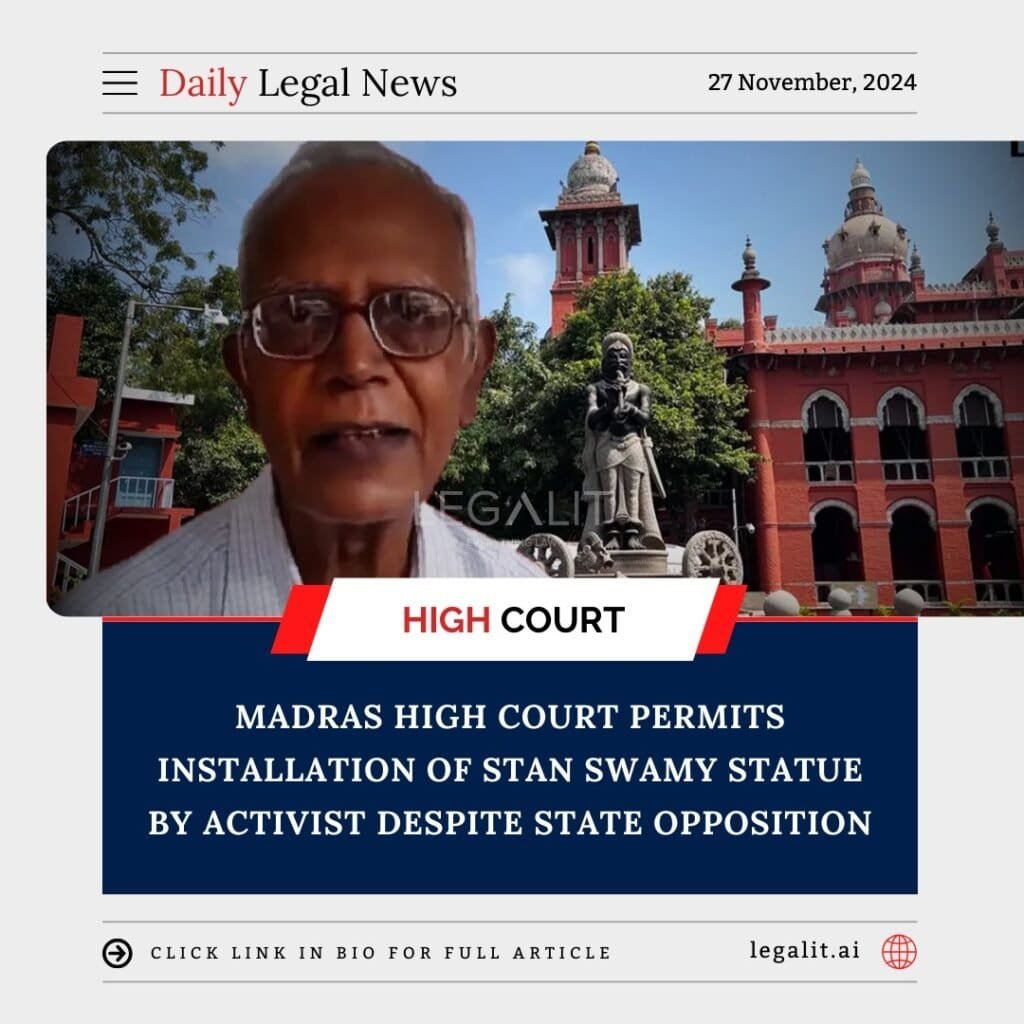
The Madras High Court has granted permission to an activist to install a statue of the late Father Stan Swamy, overruling objections from the Tamil Nadu government. The court emphasized the importance of upholding individual freedoms and the right to honor public figures, provided legal and civic requirements are met.
Background:
Father Stan Swamy, a Jesuit priest and tribal rights activist, gained national attention after his arrest under the Unlawful Activities (Prevention) Act (UAPA) in the Bhima Koregaon case. His subsequent death in judicial custody sparked widespread criticism of his treatment and raised concerns about human rights. The activist sought to commemorate Stan Swamy’s contributions by erecting a statue, a move opposed by the state government citing potential law and order issues.
Court’s Rationale:
The Madras High Court ruled that installing the statue was a legitimate expression of the activist’s admiration for Stan Swamy and did not inherently violate any law. The court noted that concerns over law and order must not infringe on constitutional rights unless credible threats are evident. It directed the petitioner to adhere to local municipal guidelines and obtain necessary permissions before proceeding.
Existing Measures:
Indian law allows individuals to install statues on private property or public land with requisite permissions. Authorities typically evaluate applications based on public safety, civic regulations, and the broader impact on the community.
Conclusion:
The Madras High Court’s decision reaffirms the fundamental rights to free expression and commemoration, balancing them with procedural compliance. This ruling sets a precedent for honoring public figures, even in the face of political or administrative resistance, as long as legal protocols are followed.
[ajax_load_more]