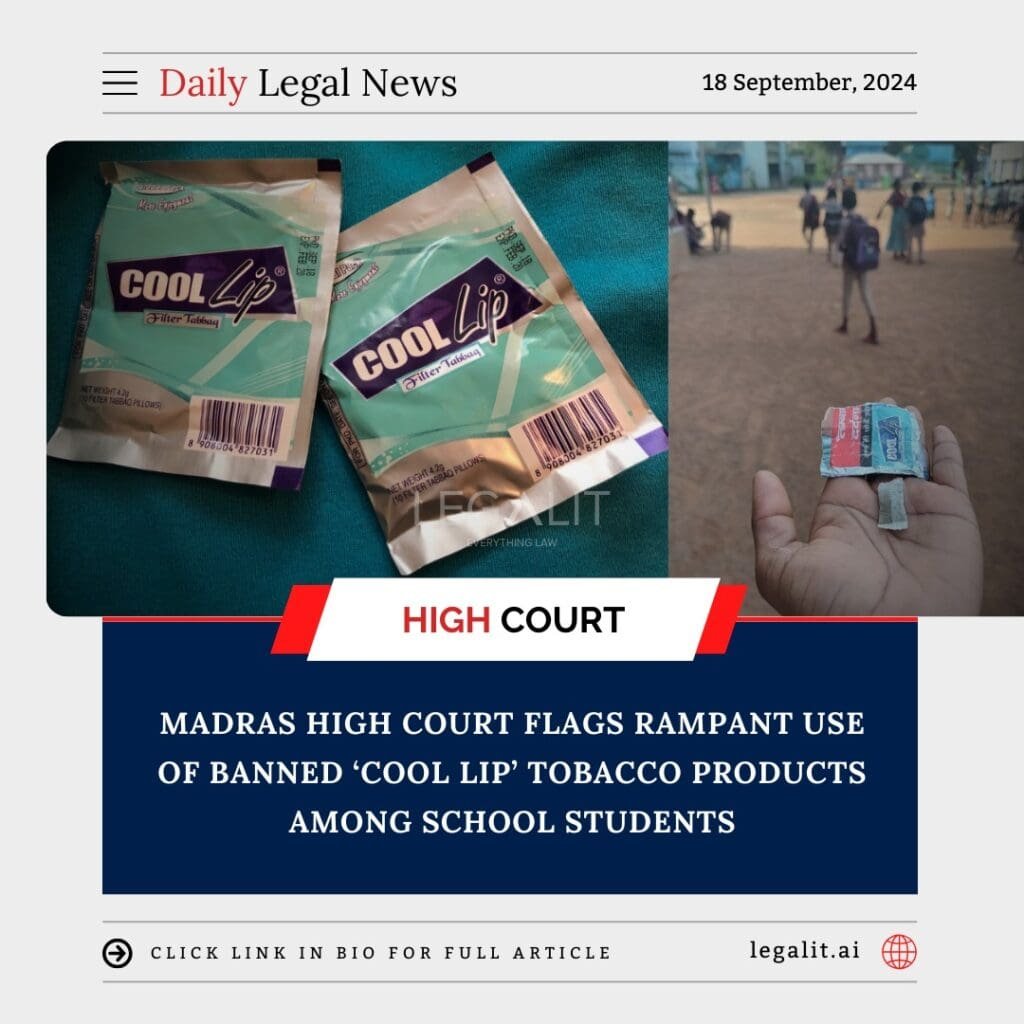
The Madras High Court has raised serious concerns over the increasing use of banned ‘Cool Lip’ tobacco products by school students, highlighting the public health risks posed by the illicit sale and consumption of these harmful substances. In its ruling, the court called for urgent action from authorities to curb the availability of these products and to protect the health and well-being of young people.
Background: The Ban on Tobacco Products
India has stringent regulations on the sale and consumption of tobacco products, especially those that target minors. The sale of tobacco to individuals under the age of 18 is illegal, and certain products, like ‘Cool Lip’ and other flavored or chewable forms of tobacco, have been banned due to their harmful effects on health. These products, often marketed in appealing packaging, pose a significant risk to young users, increasing the likelihood of addiction and long-term health issues.
Despite these legal restrictions, banned tobacco products like ‘Cool Lip’ have found their way into the hands of school students in Tamil Nadu, raising alarms about the effectiveness of enforcement mechanisms.
Court’s Observations
During the hearing of a public interest litigation (PIL), the Madras High Court took cognizance of the alarming rise in the consumption of ‘Cool Lip’ tobacco products by students. The court made the following key observations:
- Rampant Use Among Students: The court expressed concern over reports that a significant number of school students were found consuming ‘Cool Lip,’ despite its ban. The court pointed out that the easy availability of such products is putting young people at risk of addiction and severe health consequences.
- Failure in Enforcement: The court noted that despite the ban, tobacco products were being sold near educational institutions, with vendors seemingly operating without fear of legal repercussions. This raised questions about the effectiveness of current enforcement measures and the accountability of authorities responsible for monitoring the sale of banned products.
- Public Health Risks: The court highlighted the dangerous health risks associated with the use of tobacco products, especially for young people. Early exposure to tobacco can lead to addiction, respiratory problems, cancer, and other severe health issues. The court emphasized the need to protect minors from such harmful substances through stricter regulation and public awareness.
Directions Issued by the Court
In response to the alarming situation, the Madras High Court issued several directives aimed at addressing the issue:
- Immediate Crackdown on Vendors: The court ordered the state government and local authorities to conduct a thorough crackdown on vendors selling banned tobacco products, particularly around schools. Authorities were instructed to ensure that all sales outlets adhere to the laws prohibiting the sale of tobacco to minors and the sale of banned products.
- Increased Monitoring Around Schools: To safeguard students, the court directed the police and local administration to increase surveillance and monitoring near educational institutions. This includes regular inspections to ensure that vendors are not targeting students with illegal tobacco products.
- Public Awareness Campaigns: The court stressed the importance of launching widespread public awareness campaigns in schools and communities about the dangers of tobacco use. Educating students, parents, and teachers about the risks associated with tobacco consumption is essential for curbing the problem at its roots.
- Holding Authorities Accountable: The court also called for stricter accountability measures for officials responsible for enforcing the ban. Authorities who fail to take action against the sale of banned tobacco products could face legal consequences for their negligence.
Broader Implications
The court’s ruling brings attention to the broader issue of substance abuse among minors in India. It underscores the need for a multi-faceted approach involving law enforcement, education, and public health initiatives to effectively combat the sale and use of harmful substances like tobacco.
- Government’s Role in Enforcement: The ruling emphasizes the government’s responsibility to enforce bans on tobacco products effectively and to prevent their availability, particularly to vulnerable groups like schoolchildren.
- Need for Stronger Legislation: The situation may prompt a review of existing legislation to close any loopholes that allow banned products to be sold. Stricter penalties for violators and enhanced powers for enforcement agencies could be key to addressing the issue.
- Focus on Public Health: The court’s concern also highlights the need for a stronger focus on public health policies that address the issue of addiction and substance abuse among minors. Early intervention through education and counseling can play a crucial role in preventing young people from falling into the trap of tobacco addiction.
Conclusion
The Madras High Court’s flagging of the rampant use of banned ‘Cool Lip’ tobacco products among school students serves as a wake-up call for authorities to take immediate and decisive action. By cracking down on illegal sales and launching public awareness campaigns, the state can protect its young population from the serious health risks associated with tobacco consumption. The court’s intervention aims to ensure that the existing bans on harmful products are enforced more rigorously, ultimately safeguarding the health of the next generation.
[ajax_load_more]