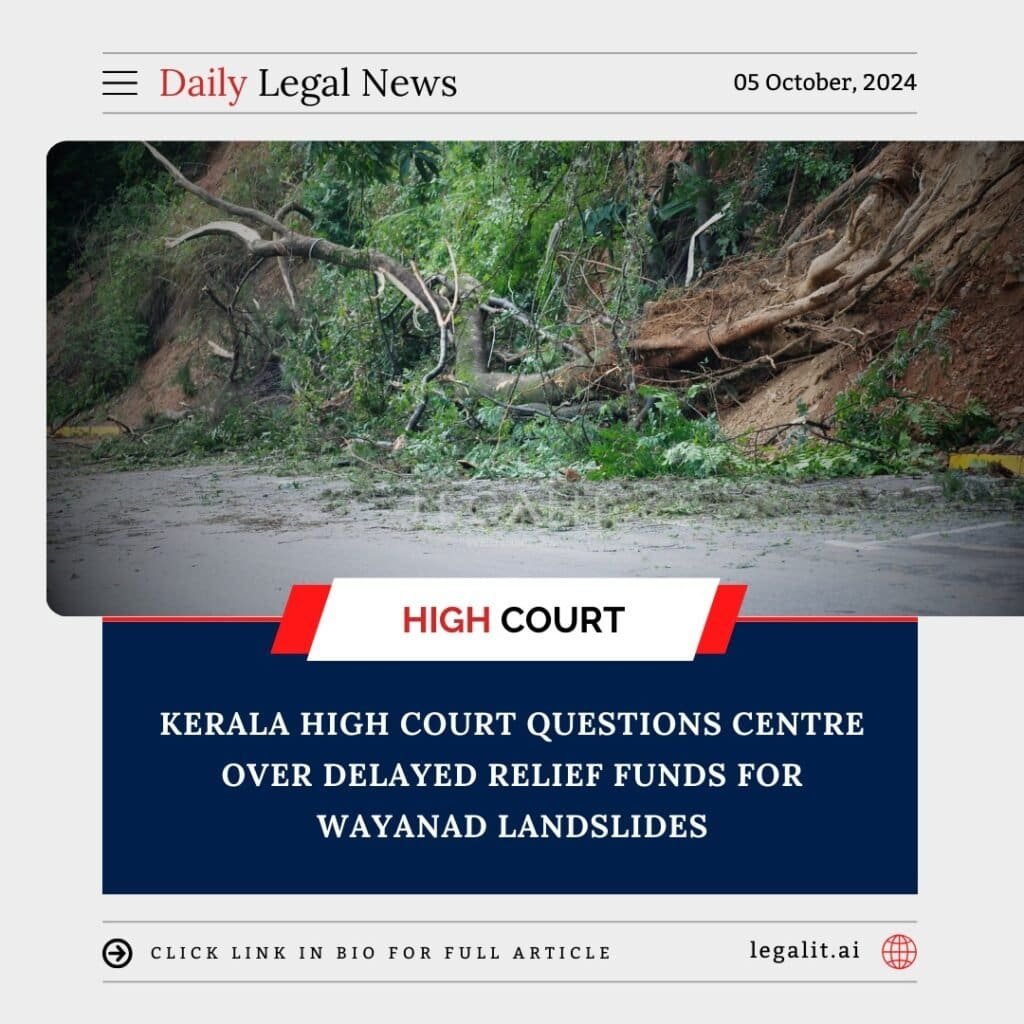
The Kerala High Court has recently pulled up the central government, questioning the delay in disbursing relief funds for the victims of the Wayanad landslides. This matter highlights the bureaucratic hurdles that often hinder timely assistance to disaster-stricken areas and raises concerns over the efficiency of the existing disaster relief mechanism in India.
Background of the Wayanad Landslides
Wayanad, a picturesque district in Kerala, has faced severe landslides over the past few years, particularly during the monsoon seasons. The 2019 landslide, which caused significant loss of life and property, was one of the worst to hit the region in recent memory. The landslides destroyed homes, farmlands, and infrastructure, rendering hundreds homeless. Following the disaster, the state government requested financial assistance from the central government to aid in recovery efforts.
The central government had initially assured financial support for the victims and infrastructure restoration. However, despite repeated requests from the state authorities and a substantial lapse of time, the promised relief funds are yet to reach the victims, prompting the Kerala High Court’s intervention.
The Court’s Ruling and Reasoning
In response to a public interest litigation (PIL) filed by activists and affected residents, the Kerala High Court questioned the Centre regarding the delayed release of relief funds. The court stressed that disaster relief must be treated with urgency and criticized the bureaucratic bottlenecks that are preventing the victims from receiving timely aid.
The bench observed that while natural calamities are unpredictable, the government’s response should be prompt and coordinated to alleviate the suffering of those affected. The court ordered the Centre to provide a detailed explanation for the delay in disbursing funds and to expedite the release of the necessary financial assistance to the victims.
Implications of the Judgment
The High Court’s intervention in this matter has several implications:
Accountability of Authorities: The ruling places pressure on both state and central authorities to be more accountable when it comes to delivering on their promises of financial assistance. It underscores the importance of ensuring that funds are not withheld due to administrative inefficiencies.
Strengthening Relief Mechanisms: This judgment could lead to a re-evaluation of disaster management policies, with an emphasis on creating a more efficient system for the distribution of relief funds. A centralized mechanism may need to be developed to ensure better coordination between state and central agencies.
Public Awareness: The court’s questioning also brings attention to the plight of those affected by natural disasters, highlighting the struggles they face due to bureaucratic delays. This increased public awareness could prompt civil society and advocacy groups to press for systemic changes in disaster relief distribution.
Need for Reforms in Disaster Relief Administration
The ongoing delay in disbursing relief funds for Wayanad’s landslide victims highlights the need for significant reforms in disaster relief administration in India:
Streamlined Approval Processes: The process of fund allocation from the Centre to the states should be streamlined, minimizing the number of bureaucratic steps involved. This could involve pre-approved contingency funds that states can access immediately after a disaster.
Real-time Monitoring: Setting up a real-time monitoring system for disaster relief funds can ensure transparency and accountability. This system could track the status of funds from allocation to disbursement, reducing the risk of unnecessary delays.
Decentralized Decision-Making: Empowering local authorities to make decisions regarding relief and rehabilitation could lead to a faster response. Providing district-level authorities with direct access to emergency funds may reduce dependency on central approvals.
Public Grievance Redressal: Establishing a public grievance redressal mechanism for victims can also help ensure that issues related to delays are brought to light swiftly and addressed by the concerned authorities.
Conclusion
The Kerala High Court’s intervention in questioning the central government over delayed relief funds for Wayanad landslides brings to the forefront the critical issue of timely disaster relief. It emphasizes the need for a more efficient, transparent, and responsive mechanism to address the challenges faced by disaster victims. As India continues to experience the impact of natural calamities, building a robust and prompt disaster relief system remains crucial for safeguarding the lives and livelihoods of its citizens.
[ajax_laod_more]