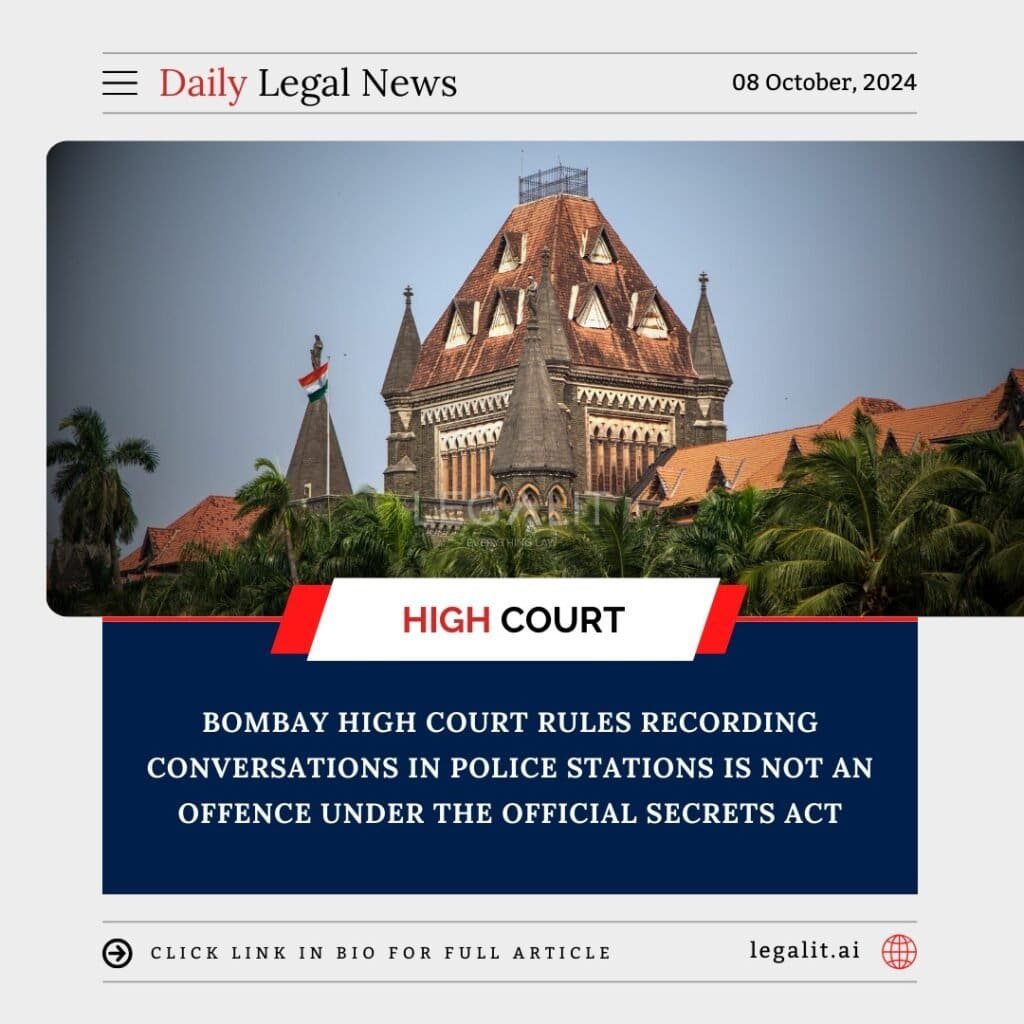
The Bombay High Court recently made a significant ruling that clarifies the legality of recording conversations in police stations, determining that such actions do not constitute an offence under the Official Secrets Act. This decision has implications for transparency and accountability within law enforcement and the rights of citizens to document interactions with police.
Background of the Case
The case arose when an individual recorded a conversation during a visit to a police station. The recording was intended to document the interaction for personal records. However, the police contended that this action violated provisions of the Official Secrets Act, which aims to protect sensitive information related to national security. The case raised questions about the boundaries of lawful conduct in public places, especially concerning transparency in police operations.
Court’s Ruling and Reasoning
In its ruling, the Bombay High Court clarified that the Official Secrets Act is primarily concerned with protecting state secrets that could jeopardize national security. The court emphasized that recording conversations in a police station, particularly those that do not involve classified information, does not fall under the ambit of this legislation. The judges highlighted the importance of transparency in law enforcement and the right of individuals to document interactions with authorities, which are crucial for accountability.
The court noted that citizens have a right to record conversations in public places, including police stations, as long as they are not infringing on the privacy of others or engaging in unlawful surveillance. This ruling affirms the principle that public officials, including police officers, operate under scrutiny from the public, reinforcing the importance of accountability in law enforcement.
Implications of the Judgment
The judgment has broad implications for both citizens and law enforcement agencies. It encourages individuals to document their interactions with police without the fear of legal repercussions, promoting greater transparency. This ruling can empower citizens to hold law enforcement accountable, potentially leading to improved policing practices and greater public trust in the police force.
Moreover, the decision may prompt law enforcement agencies to review their internal policies regarding transparency and communication with the public. It serves as a reminder that police conduct should be consistent with democratic principles, ensuring that citizens’ rights are upheld.
Need for Reforms in Police Practices
While this ruling is a positive step towards accountability, it also highlights the need for further reforms in police practices and regulations. There should be clear guidelines regarding the rights of citizens to document interactions with law enforcement, ensuring that such practices are protected under law. Training for police personnel on public engagement and transparency can also enhance their relationship with the community.
Conclusion
The Bombay High Court’s ruling that recording conversations in police stations is not an offence under the Official Secrets Act marks a significant development in the ongoing dialogue about transparency and accountability in law enforcement. As this ruling encourages citizens to document their interactions with police, it is essential for law enforcement agencies to adapt and ensure that their practices align with the principles of transparency and public accountability. Ultimately, fostering a culture of openness and respect for citizens’ rights is fundamental to strengthening trust in law enforcement agencies.
[ajax_load_more]