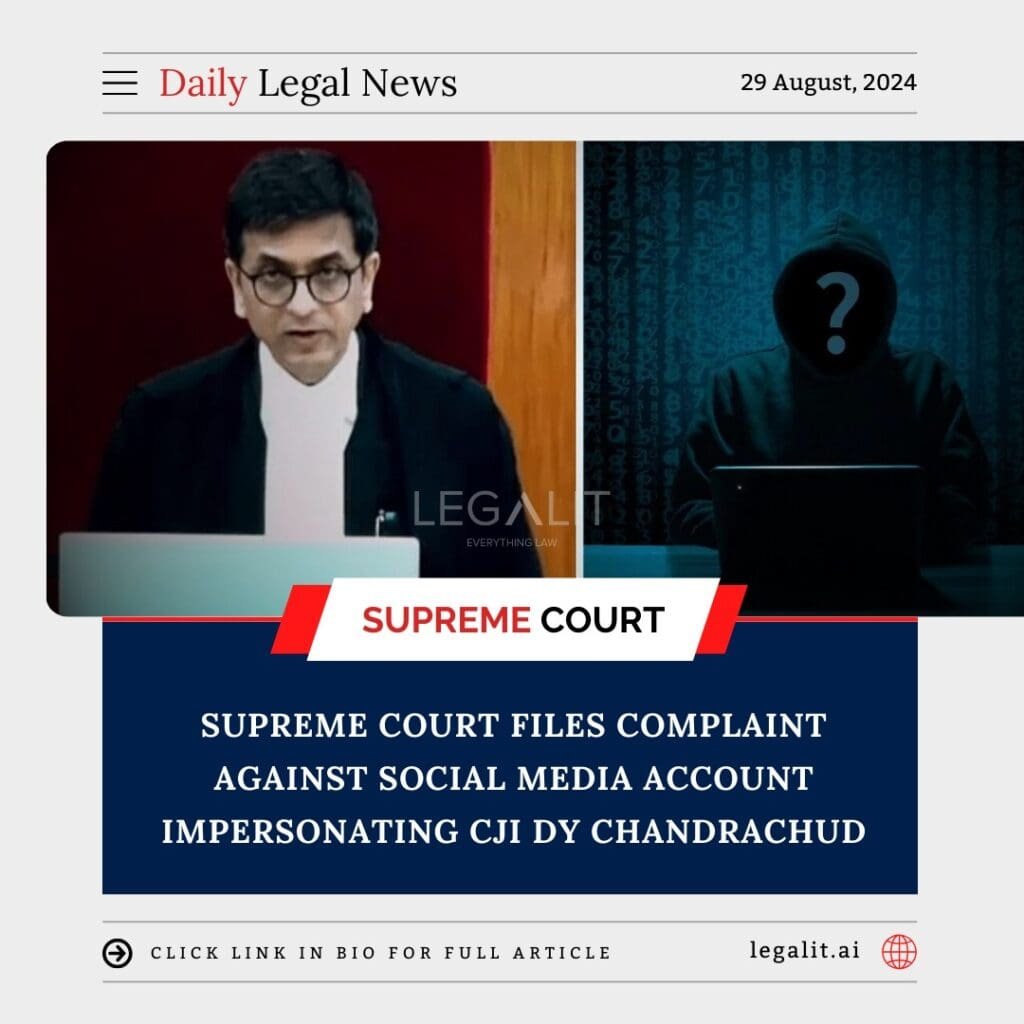
In a significant move, the Supreme Court of India has filed a formal complaint against a social media account that allegedly impersonated Chief Justice of India (CJI) DY Chandrachud. This action highlights the growing concerns over digital impersonation and the misuse of social media platforms to undermine judicial authority and spread misinformation.
Details of the Complaint:
- Nature of Impersonation:
The complaint addresses a situation where a social media account posed as Chief Justice DY Chandrachud, misleading the public by using the CJI’s name and image without authorization. Such impersonation can damage the reputation of the judiciary and create confusion among the public regarding official statements and judicial opinions. - Supreme Court’s Response:
The Supreme Court has taken a firm stance against the impersonation by filing a complaint with relevant authorities. This step is aimed at holding the perpetrators accountable and ensuring that the integrity of the judiciary is protected. By addressing this issue, the Court underscores its commitment to combating digital misinformation and maintaining the credibility of judicial figures.
Key Points in the Complaint:
- Legal Implications:
Impersonation of a high-ranking judicial officer like the CJI is a serious offense under Indian law. It can lead to charges related to fraud, defamation, and misuse of identity. The complaint filed by the Supreme Court is a step toward pursuing legal action against those responsible for the unauthorized use of the CJI’s identity. - Impact on Public Trust:
Impersonation can significantly impact public trust in the judiciary. By taking action, the Supreme Court aims to address potential public confusion and reinforce the importance of relying on official communications from legitimate sources. This is crucial for maintaining the public’s confidence in the judicial system. - Social Media Responsibility:
The complaint also highlights the broader issue of social media responsibility and the need for platforms to regulate and monitor content effectively. Social media companies are urged to implement measures to prevent impersonation and ensure that such fraudulent activities are swiftly addressed.
Implications for Digital Conduct:
- Increased Vigilance:
The incident serves as a reminder of the need for increased vigilance in digital conduct. Individuals and institutions must be aware of the risks associated with digital impersonation and take steps to protect their identities and reputations online. - Stricter Regulations:
The Supreme Court’s action may prompt discussions on the need for stricter regulations and enforcement regarding digital impersonation and online fraud. Enhanced legal frameworks and monitoring mechanisms could be developed to address similar issues in the future. - Public Awareness:
The case underscores the importance of public awareness regarding online security and authenticity. Educating the public about verifying the credibility of online sources and understanding the risks of digital impersonation can help mitigate the spread of misinformation.
Broader Context:
- Judicial Integrity:
Protecting the integrity of the judiciary is paramount for the effective functioning of the legal system. Actions such as impersonation undermine this integrity and can have far-reaching consequences. By addressing such issues, the Supreme Court reaffirms its commitment to upholding the rule of law and ensuring that judicial authority is not compromised. - Role of Social Media Platforms:
Social media platforms play a crucial role in information dissemination and public communication. It is essential for these platforms to collaborate with legal authorities to prevent misuse and protect individuals from digital impersonation and fraud.
Conclusion:
The Supreme Court’s complaint against the social media account impersonating CJI DY Chandrachud underscores the serious nature of digital impersonation and its impact on the judiciary. By taking legal action, the Court aims to safeguard its integrity and maintain public trust in the judicial system. This case also highlights the need for increased vigilance, stricter regulations, and public awareness to address digital impersonation and ensure that online platforms are used responsibly and ethically.
[ajax_load_more]