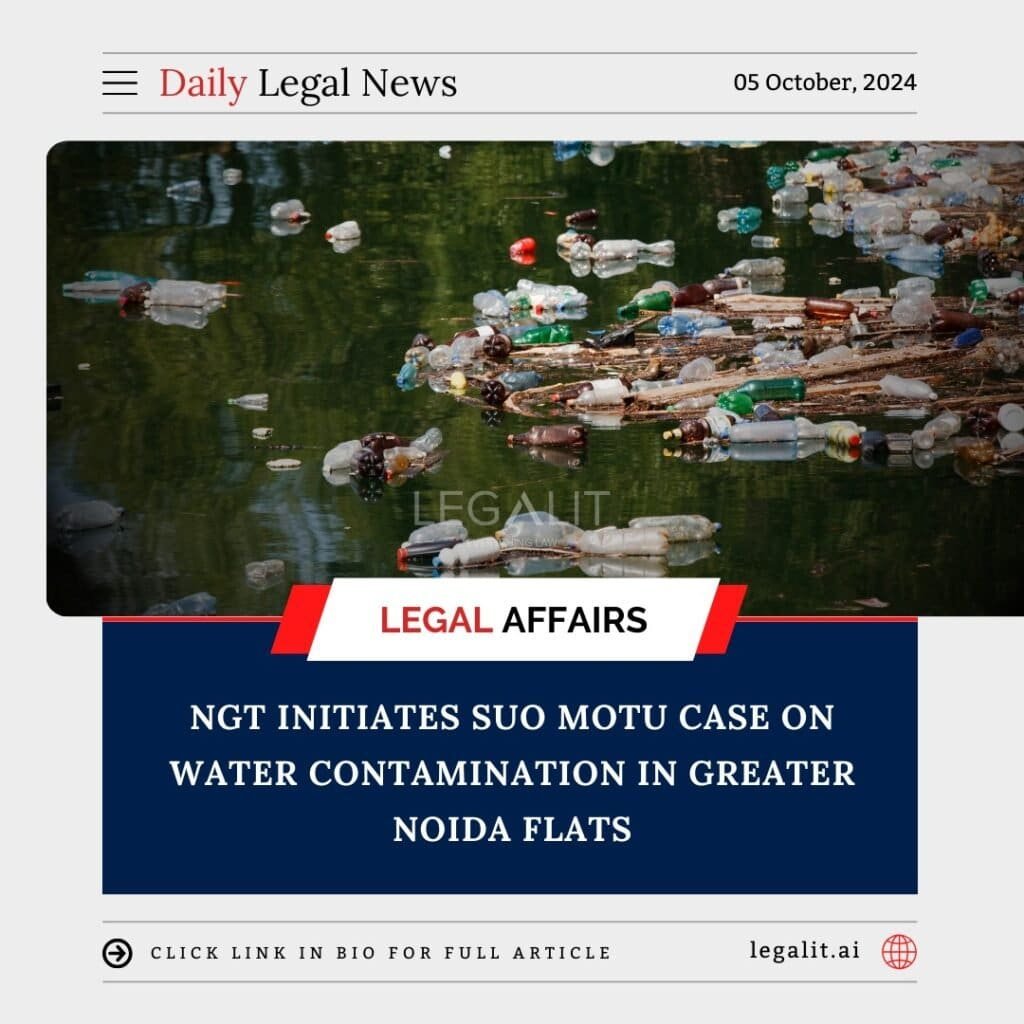
The National Green Tribunal (NGT) has taken suo motu cognizance of water contamination issues in several residential flats in Greater Noida, Uttar Pradesh. The decision by the NGT comes after reports highlighted the severe contamination of drinking water in these areas, raising concerns over public health and the state’s obligation to provide safe drinking water to its residents.
- Background of the Case
The problem of water contamination in Greater Noida’s residential complexes has been an ongoing issue for several years. Numerous residents have reported deteriorating water quality, which includes a foul smell, discoloration, and the presence of harmful substances. These complaints are particularly concerning, as the area has seen rapid urban development, which often leads to environmental challenges such as over-extraction of groundwater, untreated wastewater discharge, and lack of adequate infrastructure for water treatment.
The reports on the water quality and complaints from residents came to light through various media outlets and public representations. These prompted the NGT to step in without waiting for a formal petition, which is characteristic of a suo motu action, where the tribunal takes notice of issues that concern public health and the environment.
- NGT’s Ruling and Reasoning
The NGT, in its initial ruling, has directed several authorities, including the Uttar Pradesh Pollution Control Board (UPPCB), the Greater Noida Authority, and the concerned local bodies, to submit a detailed report on the quality of water being supplied to these residential complexes. The tribunal emphasized the following concerns:
Public Health: The NGT underscored that providing clean and safe drinking water is a fundamental duty of the state and that any failure in this regard is a violation of the citizens’ basic rights.
Responsibility of Authorities: The tribunal held that the local authorities must conduct regular testing of water quality and take appropriate measures to ensure that contaminants do not reach residential areas.
Preventive and Corrective Measures: The tribunal directed the authorities to not only identify the source of contamination but also outline preventive and corrective measures. This includes setting up proper water treatment facilities, ensuring the regular monitoring of groundwater, and taking punitive action against industries or entities found polluting the water sources.
- Implications of the Case
The NGT’s intervention in the issue of water contamination in Greater Noida could have wide-ranging implications:
Accountability of Authorities: By directing the authorities to provide detailed reports, the NGT is ensuring that there is accountability for lapses in the supply of clean drinking water. This could lead to stricter monitoring and compliance by water supply agencies and industries.
Improved Water Quality Standards: The case is expected to push the authorities to improve water treatment infrastructure and take measures to prevent contamination of groundwater. This will likely result in better quality water being supplied to residential areas in Greater Noida and potentially in other urban areas facing similar issues.
Public Awareness and Participation: The suo motu action taken by the NGT is also a testament to the power of public representation. Increased awareness among residents about their rights to safe drinking water and active participation in environmental issues can lead to more proactive action by regulatory bodies.
- Need for Reforms in Water Management
The water contamination issue in Greater Noida highlights the broader need for systemic reforms in water management and distribution in rapidly urbanizing regions:
Strengthening Infrastructure: There is an urgent need for investment in water treatment plants, particularly in areas experiencing rapid urban growth. The infrastructure should be capable of handling both the quantity and quality of water demands.
Regular Monitoring and Regulation: The authorities must implement a robust monitoring system that includes regular testing of water at multiple points in the supply chain. There should also be stringent regulation of industries that may be polluting water sources, with heavy penalties for non-compliance.
Awareness Campaigns: The government should run awareness campaigns to educate residents about safe water practices and encourage them to report any issues related to water quality. Public participation is crucial in monitoring and safeguarding natural resources.
- Conclusion
The NGT’s suo motu intervention in the Greater Noida water contamination issue serves as an important reminder of the state’s obligation to ensure access to clean and safe drinking water for all citizens. It highlights the role of regulatory bodies in addressing environmental and public health concerns, especially in urban areas where rapid growth can lead to serious lapses in essential services.
By holding authorities accountable and directing immediate action, the NGT is setting a precedent for proactive governance. However, the issue also underscores the need for long-term reforms in water management, ensuring that residents do not have to face such crises in the future. Ultimately, the right to clean drinking water is fundamental, and effective measures must be taken to protect and fulfill this essential need.
[ajax_laod_more]