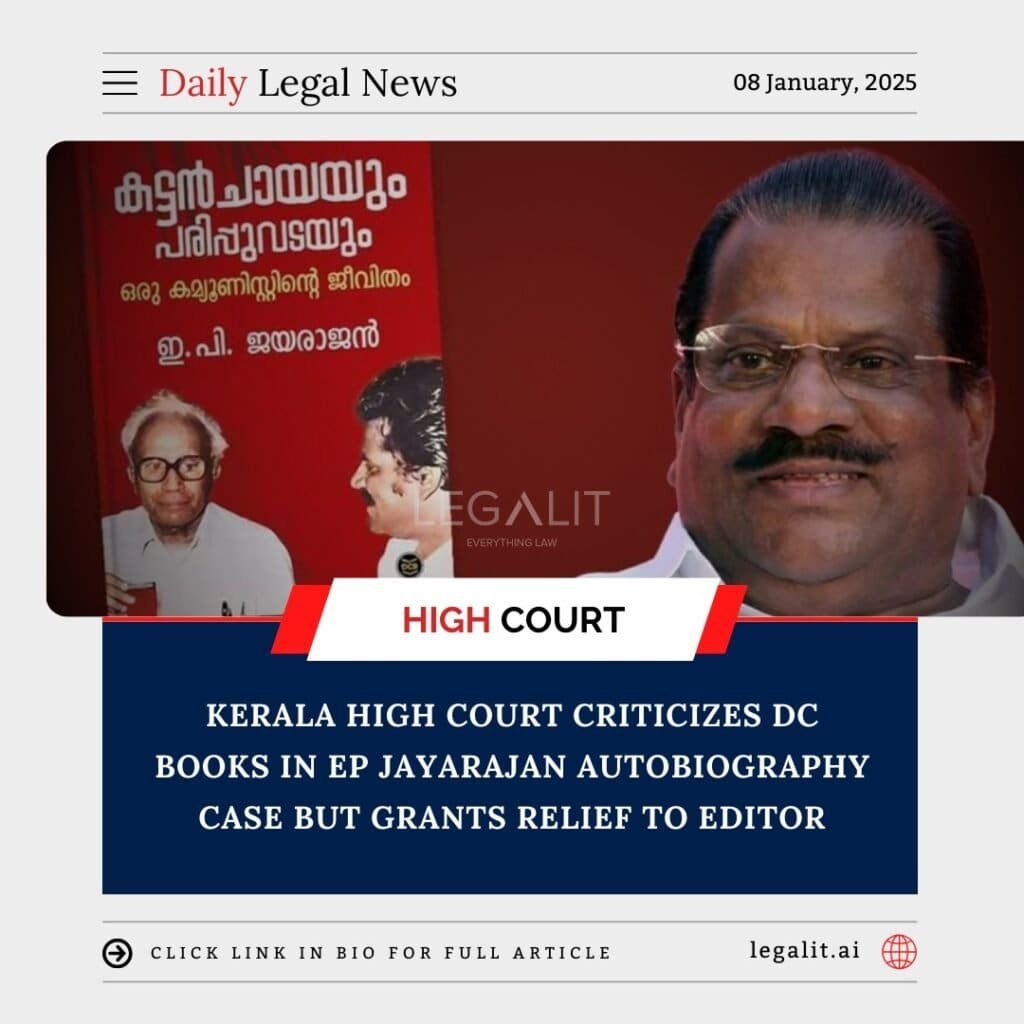
In a landmark ruling, the Kerala High Court has criticized DC Books for its role in the controversy surrounding the autobiography of EP Jayarajan, a prominent leader of the Left Democratic Front (LDF). However, the court has granted relief to the editor of the book, who was facing legal action for publishing the content. The case, which centers on allegations of defamation and violations of copyright, has sparked significant discussion about freedom of expression and the responsibilities of publishers and editors in handling sensitive content.
Background of the Case
EP Jayarajan, a key political figure in Kerala, published his autobiography through DC Books, detailing various aspects of his political life and career. The autobiography, however, stirred controversy due to certain sections that were allegedly defamatory to several individuals and organizations.
This led to legal challenges from the affected parties, claiming that the content of the book was libelous and violated their rights. The publisher, DC Books, and the editor of the autobiography faced legal scrutiny, with accusations that they had failed to adequately verify the content before publication, potentially leading to harm to the reputation of those mentioned in the book.
The Kerala High Court was called upon to address these legal challenges, particularly focusing on whether the publisher and editor were responsible for the allegedly defamatory content and how the law applied to freedom of expression in such instances.
Court’s Ruling
In its ruling, the Kerala High Court expressed its displeasure with DC Books for not exercising more diligence in the vetting process prior to publication. The court pointed out that the publisher, as the gatekeeper of content, had a duty to ensure that no defamatory material was included in the autobiography that could damage the reputations of individuals or organizations.
However, in a significant turn of events, the court granted relief to the editor of the book, finding that the editor’s role in the publication was not to be held accountable for the alleged defamatory statements. The court acknowledged that the editor’s responsibility primarily lay in the technical and editorial aspects of the book and not in verifying the factual accuracy of the political content.
The court further emphasized that the editor had acted in good faith and that any issues arising from the content of the autobiography were primarily the responsibility of the publisher.
Implications of the Ruling
1. Publisher Responsibility in Content Management
This ruling emphasizes the publisher’s responsibility in ensuring that content is free from defamatory or harmful material. DC Books, as the publisher, is expected to exercise greater caution and due diligence when dealing with potentially sensitive content.
2. Freedom of Expression vs. Defamation
The case highlights the delicate balance between the right to freedom of expression and the protection of individuals from defamation. While the court upheld the editor’s right to freedom of expression, it stressed the need for responsible publishing practices, especially when dealing with autobiographies that can have significant personal and political implications.
3. Legal Precedents on Editorial Responsibility
The decision serves as an important precedent in clarifying the extent of an editor’s legal responsibility. While editors play a crucial role in shaping content, the ruling suggests that they are not automatically liable for defamatory statements unless their actions or omissions demonstrate negligence or malice.
Future Course of Action
As the Kerala High Court has granted relief to the editor, DC Books may face further legal proceedings regarding its role in the publication of the autobiography. The publisher could be required to address the concerns raised by the affected parties and potentially issue corrections or apologies.
The ruling also leaves open the possibility of appeals, particularly from those who believe that the publisher should be held fully accountable for the defamatory content. As the case progresses, it may set a key precedent for similar defamation cases involving publishers and editors in the future.
Conclusion
The Kerala High Court’s ruling in the EP Jayarajan autobiography case has raised important questions about the responsibilities of publishers and editors in the realm of political publishing. While the publisher, DC Books, has been criticized for its failure to adequately vet the content, the court’s decision to grant relief to the editor underscores the complexities of balancing freedom of expression with the protection of reputations. The case is likely to be closely followed by the publishing industry, as it could have significant implications for the way autobiographies and political content are managed and published in the future.
[ajax_load_more]