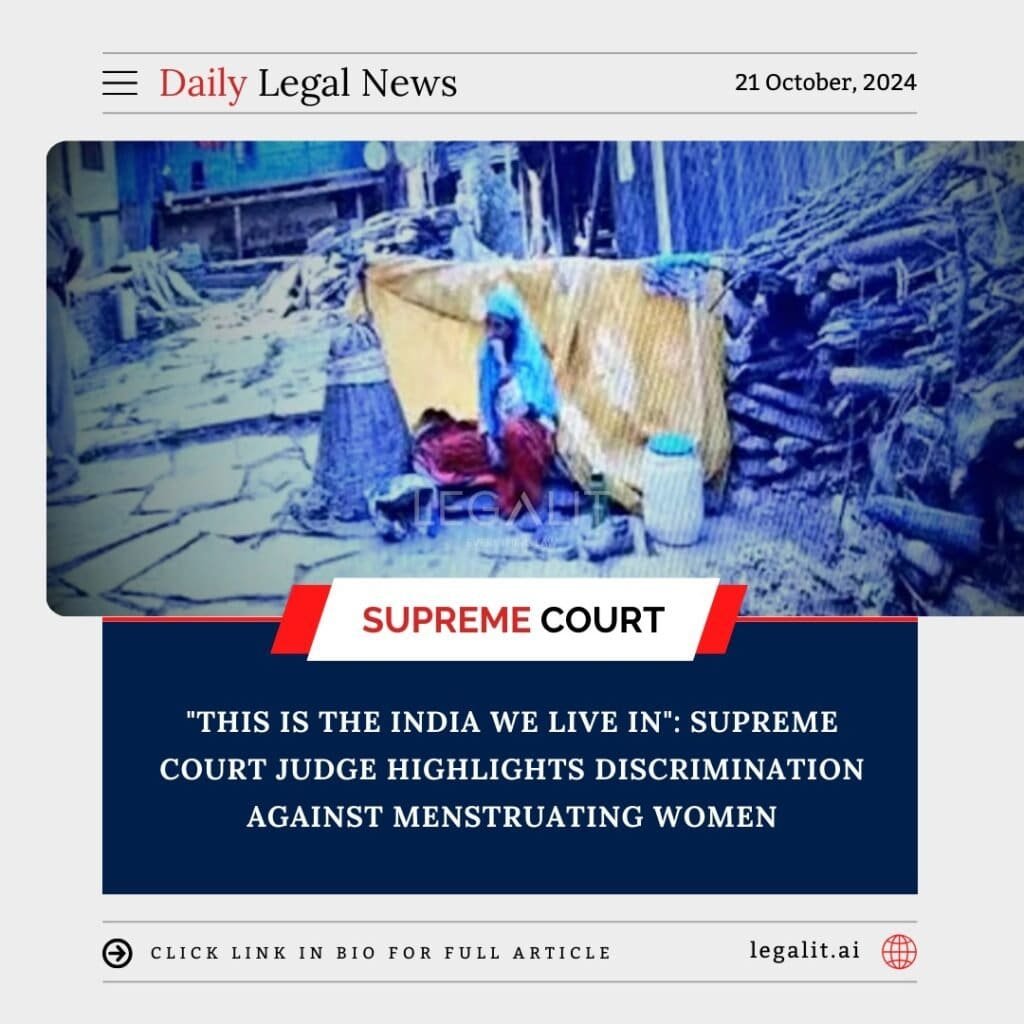
In a recent hearing, a Supreme Court judge brought to light a troubling instance of discrimination faced by a menstruating woman, who was allegedly barred from entering her own house due to societal taboos surrounding menstruation. The judge presented a photograph depicting the woman in this distressing situation, emphasizing the systemic issues that persist in Indian society regarding menstruation and women’s rights.
Background:
The issue of menstruation in India has long been shrouded in stigma and cultural taboos, leading to widespread discrimination against women. Many communities impose restrictions on menstruating women, including exclusion from certain spaces, activities, and even family gatherings. This incident has highlighted the need for a societal shift in how menstruation is perceived and treated, particularly within the legal and social frameworks that govern women’s rights.
Court’s Rationale:
The Supreme Court’s intervention underscores the judiciary’s role in addressing and challenging regressive practices. By showcasing the photo and articulating the impact of such discrimination, the judge aimed to draw attention to the urgent need for legal reforms that protect women’s rights and promote gender equality. The judiciary’s stance reflects a commitment to combating stigma and ensuring that women’s dignity is upheld, regardless of their menstrual status.
Implications:
This revelation has broader implications for the ongoing discourse on women’s rights in India. It serves as a reminder of the pervasive discrimination that many women face and the critical need for legal protections against such practices. The judiciary’s involvement could catalyze further discussions on legislative measures aimed at dismantling harmful taboos and fostering an environment where women can live free from stigma related to natural biological processes.
Conclusion:
The Supreme Court judge’s poignant remarks and the accompanying photo serve as a powerful reminder of the societal changes needed to ensure that menstruating women are treated with respect and dignity. As the nation grapples with these issues, the call for legal reforms and greater societal awareness becomes increasingly essential in promoting gender equality and women’s rights.
[ajax_load_more]