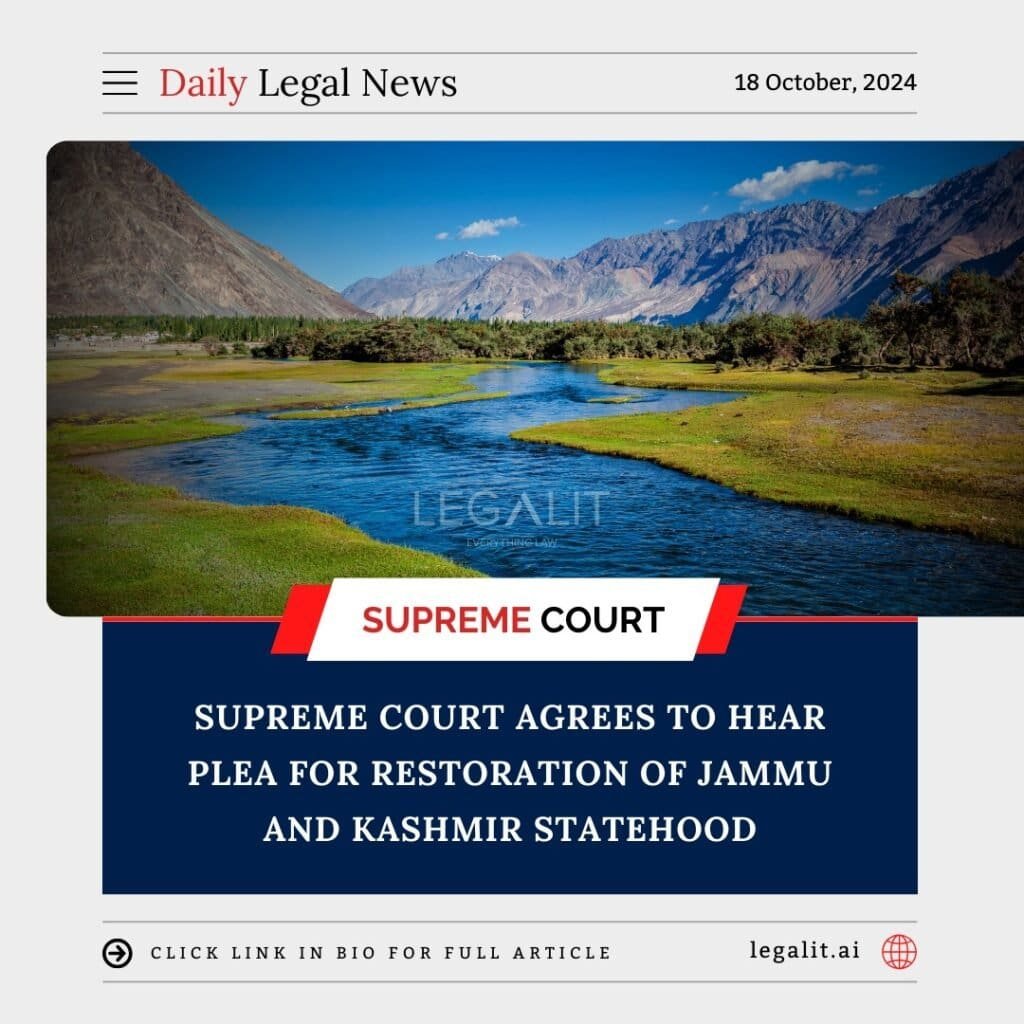
The Supreme Court of India has agreed to list a plea seeking the restoration of statehood to Jammu and Kashmir. This development marks a significant step in addressing the political and legal status of the region following its reorganization in August 2019 when it was stripped of its statehood and bifurcated into two Union Territories.
Background of the Plea:
The petition emphasizes the need for restoring the constitutional status of Jammu and Kashmir, arguing that the current Union Territory status undermines the democratic rights of its residents. Proponents of the plea have raised concerns regarding governance, political representation, and the overall impact of the reorganization on the rights of the people in the region.
Court’s Stance:
By agreeing to list the plea, the Supreme Court acknowledges the ongoing discourse around the region’s status. The court’s willingness to hear the case indicates an understanding of the complex legal and political implications surrounding Jammu and Kashmir, especially in the context of democratic governance and civil rights.
Implications:
This move could have profound implications for the political landscape in Jammu and Kashmir. If the court ultimately rules in favor of restoring statehood, it could pave the way for a more autonomous governance structure and enhanced political participation for the residents of the region.
Conclusion:
The Supreme Court’s decision to consider the plea for restoring Jammu and Kashmir’s statehood highlights the judiciary’s role in addressing significant constitutional matters. As discussions continue regarding the region’s future, this case could shape the legal and political framework surrounding governance in Jammu and Kashmir.
[ajax_load_more]