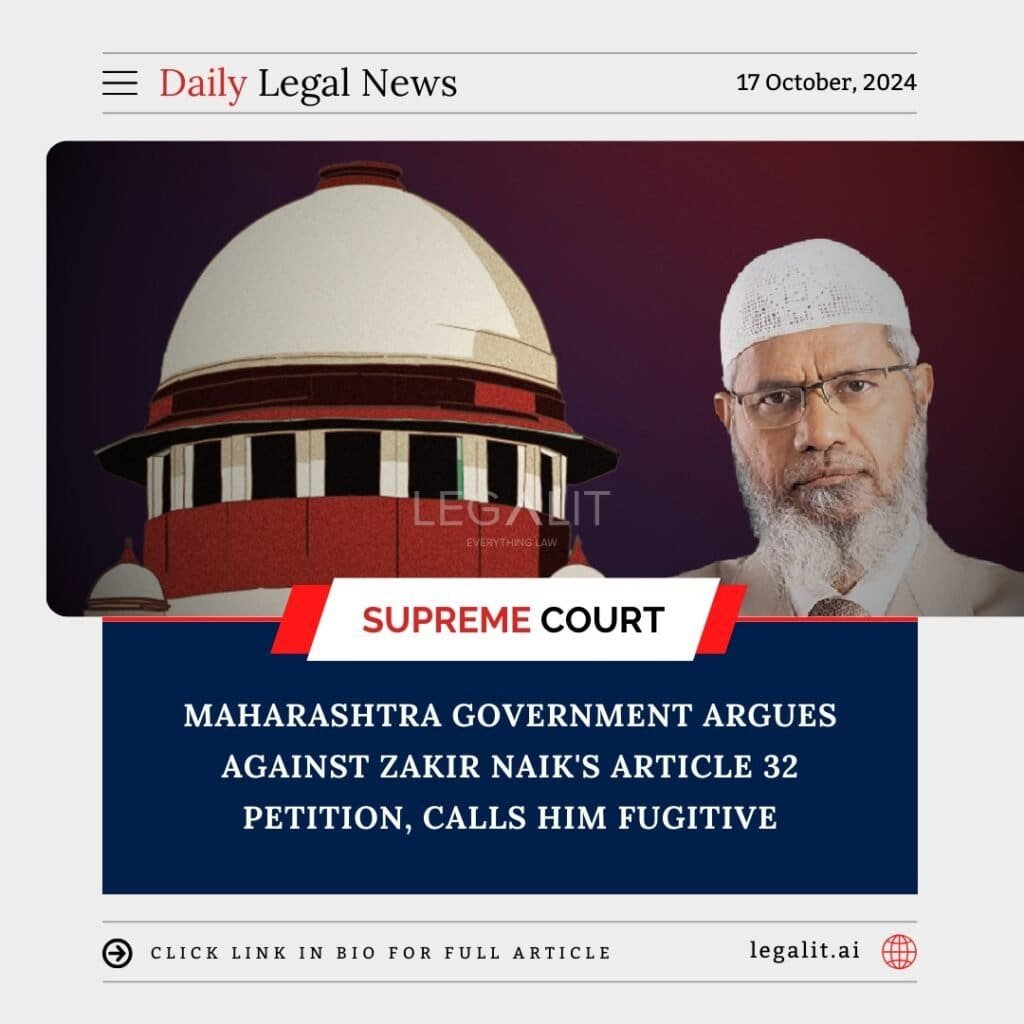
The Maharashtra government has strongly opposed Islamic preacher Zakir Naik’s plea before the Supreme Court, arguing that as a proclaimed fugitive, he cannot file a petition under Article 32 of the Constitution. Naik had approached the court seeking to club multiple FIRs lodged against him across various states for alleged hate speech and promoting communal discord.
Background:
Zakir Naik, who has been residing abroad since 2016, faces several FIRs for making inflammatory speeches that allegedly incite religious violence. The preacher, through his petition, sought protection from arrest and requested the Supreme Court to combine the multiple FIRs filed against him into one.
Maharashtra’s Response:
The Maharashtra government contended that Naik, having fled the country to evade investigation and trial, should not be allowed to access constitutional remedies like Article 32, which is meant for the protection of fundamental rights. They further argued that a fugitive from justice cannot demand the court’s protection when he has willfully refused to face the law.
Legal Implications:
Article 32 of the Constitution allows citizens to approach the Supreme Court directly for the enforcement of their fundamental rights. However, the state’s argument is that Naik, having fled from prosecution, forfeits the right to claim protection under this provision. The Supreme Court’s decision in this case could set a precedent regarding the extent to which fugitives can claim constitutional rights while avoiding trial.
Conclusion:
The court’s ruling on whether Zakir Naik can access Article 32 protections while being declared a fugitive will have significant implications for both the preacher’s legal strategy and broader constitutional interpretations related to the rights of individuals evading justice.
[ajax_load_more]