Background of the Case:
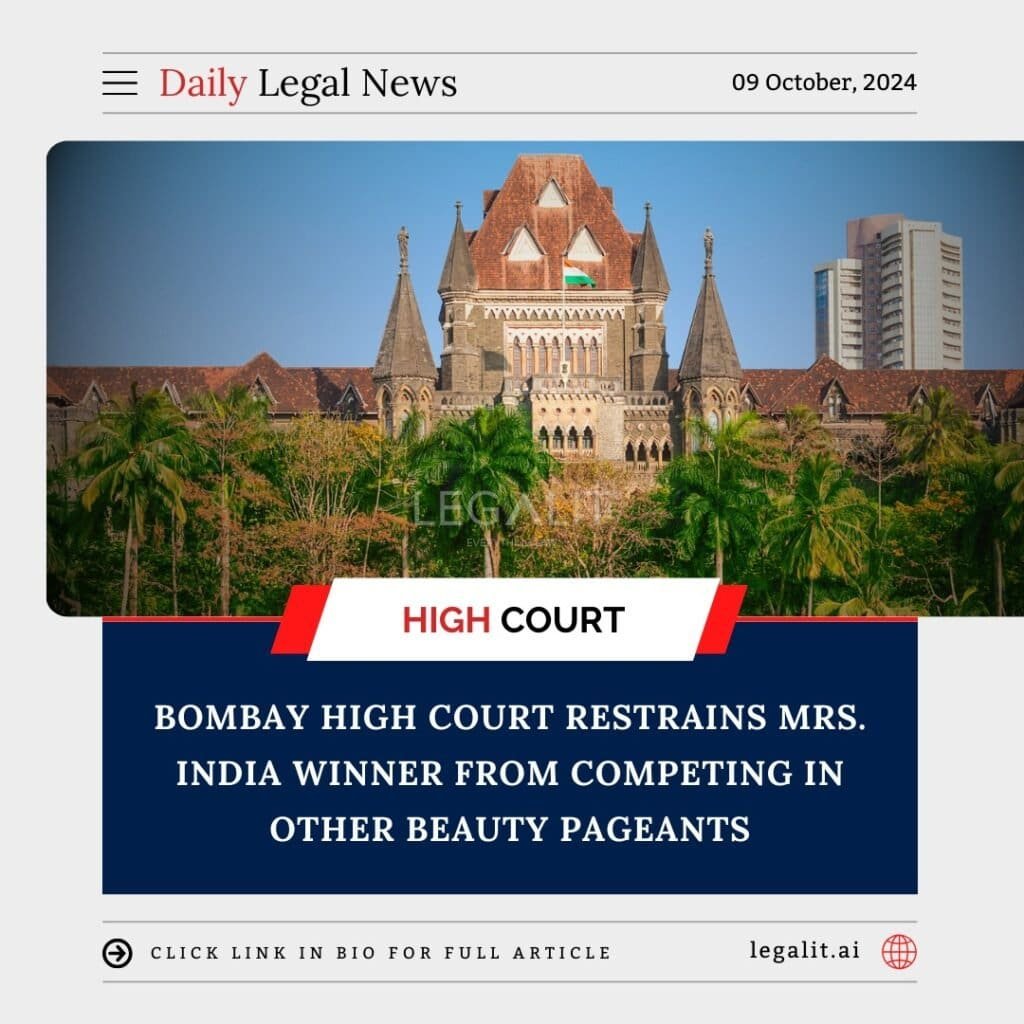
In a recent legal battle that has caught public attention, the Bombay High Court issued an order restraining the reigning Mrs. India titleholder from participating in any other beauty pageants. The case was filed by the organizers of the Mrs. India contest, who claimed that the winner, having signed an exclusive agreement with them, was legally bound to refrain from competing in or promoting other beauty events without their consent.
According to the terms of the contract, the Mrs. India winner is expected to represent the pageant exclusively for a certain period. The pageant organizers argued that this agreement was crucial to preserving the prestige and credibility of the competition. However, the titleholder reportedly intended to take part in another event, which led the organizers to file for a legal injunction.
Court’s Ruling and Reasoning:
The Bombay High Court, after reviewing the claims and contractual obligations, issued a temporary injunction restraining the Mrs. India winner from participating in any other beauty contests. The court acknowledged the enforceability of the exclusivity clause in the contract and emphasized that breaching it would not only violate the agreement but also diminish the integrity of the title.
The court further noted that allowing the winner to participate in other pageants without the organizer’s approval could lead to potential financial and reputational harm to the Mrs. India competition. As the titleholder voluntarily agreed to the terms of the contract, the court held that she must adhere to its provisions during her reign.
Implications of the Judgment:
- Enforcement of Contracts in Beauty Pageants: The ruling highlights the enforceability of contractual obligations within the beauty pageant industry, underscoring the importance of exclusivity agreements in maintaining the reputation of the brand.
- Preservation of Title Integrity: By issuing this injunction, the court has reinforced the idea that pageant titles carry certain responsibilities and limitations, which titleholders are expected to honor. This helps protect the integrity and public image of such competitions.
- Deterrence of Future Violations: The ruling acts as a deterrent for future winners of beauty contests who may contemplate disregarding their contractual obligations. It stresses the legal consequences of violating exclusivity agreements.
Need for Clearer Contractual Terms:
While the court’s ruling serves the interests of the pageant organizers, there is a growing need for more transparency and fairness in the contractual agreements between participants and organizers. Titleholders should be fully aware of the terms they are agreeing to, and there should be clear guidelines on how such agreements are enforced.
Conclusion:
The Bombay High Court’s decision to restrain the Mrs. India winner from participating in other beauty pageants underscores the binding nature of exclusivity agreements in the beauty industry. This ruling serves to protect the reputation and credibility of beauty pageants, while also signaling the importance of contractual adherence. As the legal proceedings continue, it remains to be seen how this case will influence future agreements between pageant organizers and contestants in the competitive world of beauty contests.
[ajax_load_more]